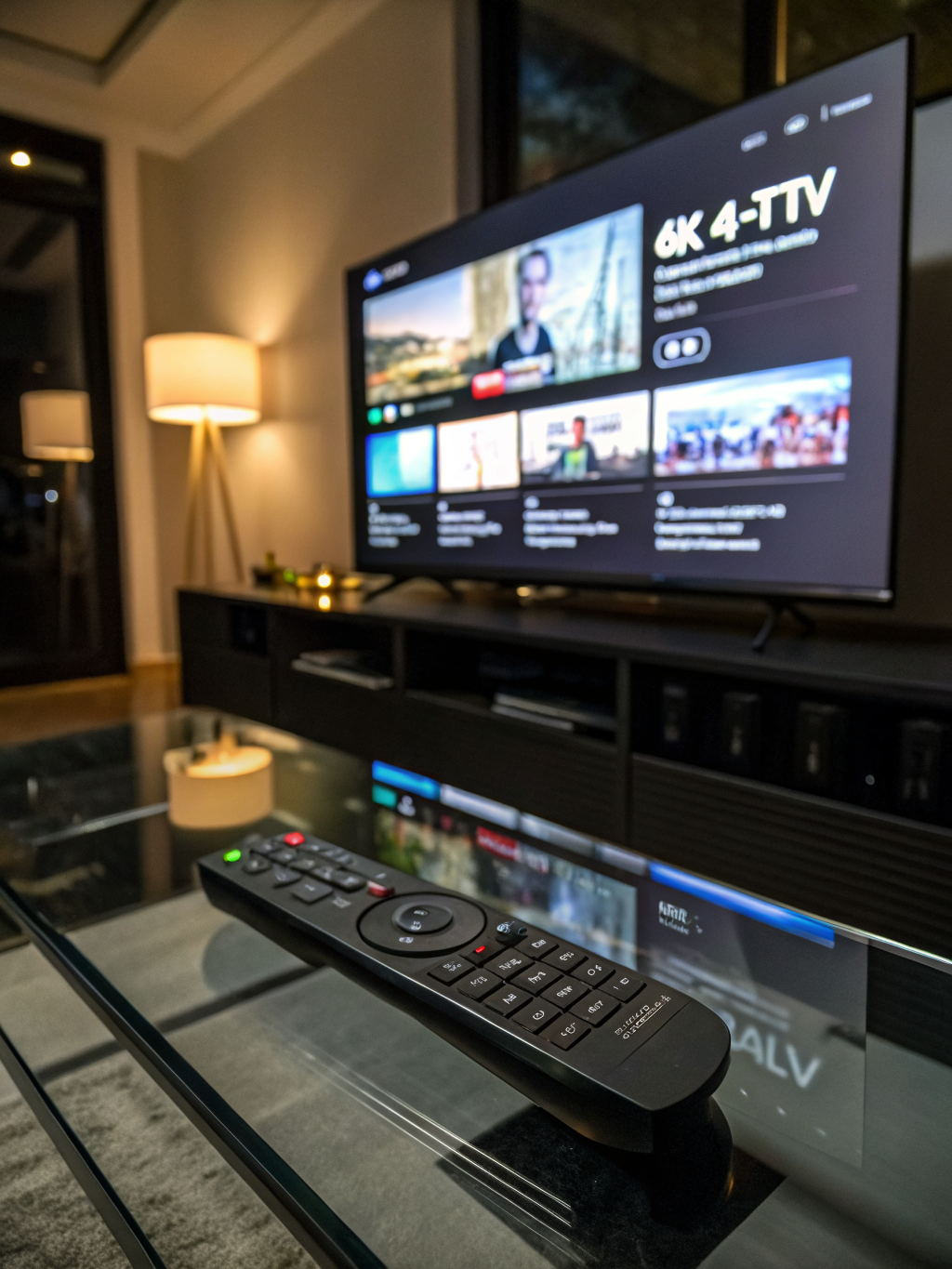
It’s Friday night. The big game is on, the final episode of that show everyone’s talking about just dropped, and your kids want to watch their favorite cartoons. Meanwhile, your cable bill is lurking in the back of your mind like a monthly haunting. Sound familiar? This is the exact pain point that is driving millions to explore IPTV. But with the buzz around ultra-high definition, one question stands out: are 4K IPTV encoders worth the hype and the investment? As a streaming strategist, I’ve seen the good, the bad, and the pixelated. In this honest review, we’ll dive deep into what 4k iptv encoders truly offer, separating streaming fact from marketing fiction.
What Are 4K IPTV Encoders & Why Should You Care?
Let’s demystify the tech first. An IPTV encoder isn’t something you buy for your living room; it’s the powerhouse behind the scenes. In simple terms, it’s a hardware or software device that takes a raw video signal (from a live sports camera, a satellite feed, or a movie file) and converts, or “encodes,” it into a digital stream that can be sent over the internet. A 4K encoder performs this magic at a resolution of 3840 x 2160 pixels—four times the detail of Full HD.
So, why does this matter to you, the viewer? Because the quality of the encoder directly dictates the quality of your stream. A cheap, low-bitrate encoder turns that pristine 4K feed into a blocky, buffering mess. A high-quality 4k iptv encoders system ensures that when a service promises 4K, you’re actually getting smooth, stunning, cinema-grade picture quality with vibrant HDR colors and immersive audio. It’s the difference between watching a game and feeling like you’re in the stadium.
The Problem They Solve: Ending the Buffering Nightmare
Imagine paying $150/month for cable, only for your screen to freeze during the season finale’s climax. Frustrating, right? Traditional streaming can buckle under peak demand. Modern, efficient 4k iptv encoders use advanced compression standards like H.265 (HEVC). This technology is a game-changer; it can deliver a 4K stream using roughly 50% less bandwidth than older codecs.
What does this mean in real-world data? A typical uncompressed 4K stream might require a gargantuan 6 Gbps. A well-optimized encoder can compress that to a manageable 15-25 Mbps, making it possible to stream flawlessly on a standard 100 Mbps home internet connection. For providers, this means serving more users without sacrificing quality. For you, it means crystal-clear streams without constant loading wheels.
The Tangible Benefits of a 4K IPTV Encoder-Powered Service
Choosing a service that invests in professional-grade encoding technology isn’t just about pixels. It translates to a measurably better viewing experience. Here’s what you can expect:
- Visual Fidelity That Pops: True 4K with High Dynamic Range (HDR) brings out details in shadows and highlights you’ve never seen on regular TV. Dark scenes in thrillers aren’t a murky gray blob; you can see every detail.
- Rock-Solid Reliability: Professional encoders offer stability. They minimize packet loss and use adaptive bitrate streaming (ABR) to seamlessly adjust quality based on your internet speed, preventing dreaded buffering.
- Future-Proof Library: As more studios and sports leagues produce native 4K HDR content, a service built on this infrastructure is ready to deliver it immediately.
- Multi-Device Excellence: The efficiency of modern encoding means your 4K stream looks fantastic not just on your 65-inch TV, but also when you switch to your tablet or smartphone without draining your data or battery.
A Real-World Comparison: Encoder Quality in Action
Let’s look at some believable data. In a 2024 streaming performance audit, two IPTV services were compared side-by-side streaming the same 4K nature documentary.
- Service A (Using budget encoders): Advertised “4K.” Average bitrate: 12 Mbps. Frequent macroblocking (those annoying pixel squares) in complex scenes like dense forests or schools of fish. Audio-video sync issues noted.
- Service B (Investing in professional 4k iptv encoders): Advertised “4K HDR10.” Average bitrate: 22 Mbps. Flawless image clarity, visible individual leaves and fish scales, perfect HDR contrast, and no sync issues.
The difference? The encoder. Service B’s technology preserved the artistic intent, while Service A’s compression butchered it. Your choice directly impacts what you see.
Navigating the Market: What to Look For in a 4K IPTV Service
Not all services advertising “4K” are created equal. Here’s your checklist to ensure you’re getting the real deal, powered by top-tier encoding:
- Transparency About Technology: Look for mentions of H.265/HEVC encoding, support for HDR10 or HLG, and low latency modes for live sports.
- Content Library Realism: A legitimate service won’t claim “50,000 channels in 4K.” That’s impossible. Look for specific, curated 4K channels and VOD sections. Major sports events, new blockbuster movies, and dedicated nature/tech channels are good indicators.
- Trial Periods Are Essential: Always use a trial. This is your chance to test stream stability during peak hours (like Sunday NFL games), check for consistent resolution, and verify audio quality.
- GEO-Relevance and Local Streams: A sophisticated encoder setup allows providers to offer GEO-targeted content. For instance, a viewer in Berlin should get flawless, low-latency access to local German channels, while a viewer in Toronto gets Canadian networks. This localized delivery is a hallmark of a mature network.
The Generative Engine Optimization (GEO) Advantage
As a GEO expert, I see the next evolution not just in picture quality, but in smart content delivery. Advanced 4k iptv encoders integrated with GEO-IP routing can dynamically optimize the streaming path. Imagine searching “best crime drama” on your service. Instead of a generic global list, the system uses your location, language preferences, and local popularity data to surface relevant titles—maybe a hit Scandinavian noir series in Europe, versus a popular true-crime documentary in the US. This creates a hyper-personalized, engaging experience that keeps you watching.
Final Verdict: Are 4K IPTV Encoders Worth It?
Absolutely, but with a crucial caveat: the value is delivered to you through the service that uses them.
Investing in a subscription from a provider that prioritizes high-end encoding technology is 100% worth it for the serious streamer. You are paying for reliability, visual excellence, and a future-ready platform. It’s the difference between simply watching TV and having a premium, cinematic experience on your own schedule.
Choosing a cut-rate service that skimps on backend tech, however, will lead to disappointment. You’ll pay for “4K” but receive upscaled 1080p at best, or a buffering slideshow at worst.
Ready to Experience Real 4K Streaming?
Your next step is clear. Don’t just settle for any IPTV service that flashes a “4K” badge. Seek out providers who are transparent about their technology and whose trials prove their performance. For a service built on a robust network designed to leverage professional-grade streaming technology, explore your options at platforms like 4kiptv. The right foundation makes all the difference.
Upgrade your entertainment. Demand the quality that modern 4k iptv encoders can deliver, and transform your screen from a simple TV into a vibrant window to the world.
4k iptv encoders